
How to Move a Bed, Sofa and Refrigerator Without Damage
The safest way to move a bed, sofa and refrigerator without damage is to disassemble what you can, protect surfaces with quality padding, and keep appliances upright at all times. A queen mattress needs a bag, a sofa needs its legs removed and wrapped in moving blankets, and a refrigerator needs 24 hours to defrost before it travels. If you’d rather not handle the weight or the risk, Milestone Moving Co. offers free in-home and video estimates in Hollywood - call (855) 890-3455.
We’ve been moving families in Hollywood since 2006, and the three items that show up damaged most often are exactly these: beds with torn upholstery, sofas with snapped frames, and refrigerators with compressor damage from being laid flat. Here’s how to avoid the mistakes we’ve seen in thousands of moves.
Moving a Bed: Disassemble First, Protect Second
A bed looks simple until you’re trying to angle a king-size frame through a Hollywood condo doorway with a turn at the landing. The headboard cracks, the side rails splinter, or the mattress picks up a stain from the truck floor.
Start by stripping everything. Bag the linens, pillows, and mattress protector separately. Remove the mattress and box spring - these are the heaviest, most awkward pieces and they go out first when the path is clear.
For the frame:
- Photograph the assembly before you touch a bolt. Your reassembly manual.
- Remove headboard, footboard, and side rails. Keep all hardware in a labeled bag taped to the largest piece.
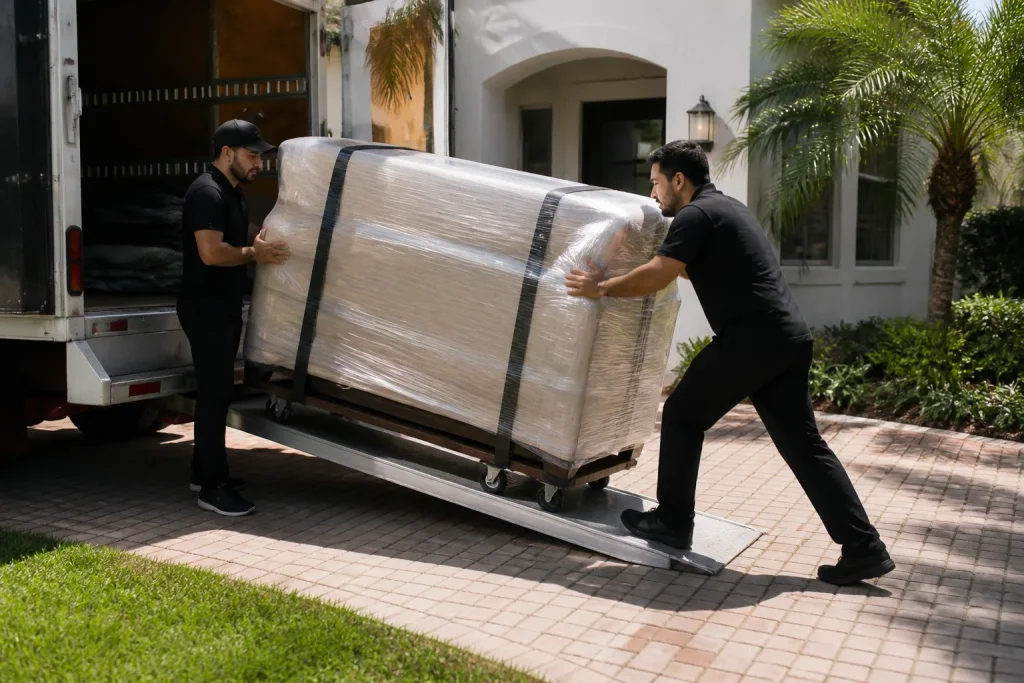
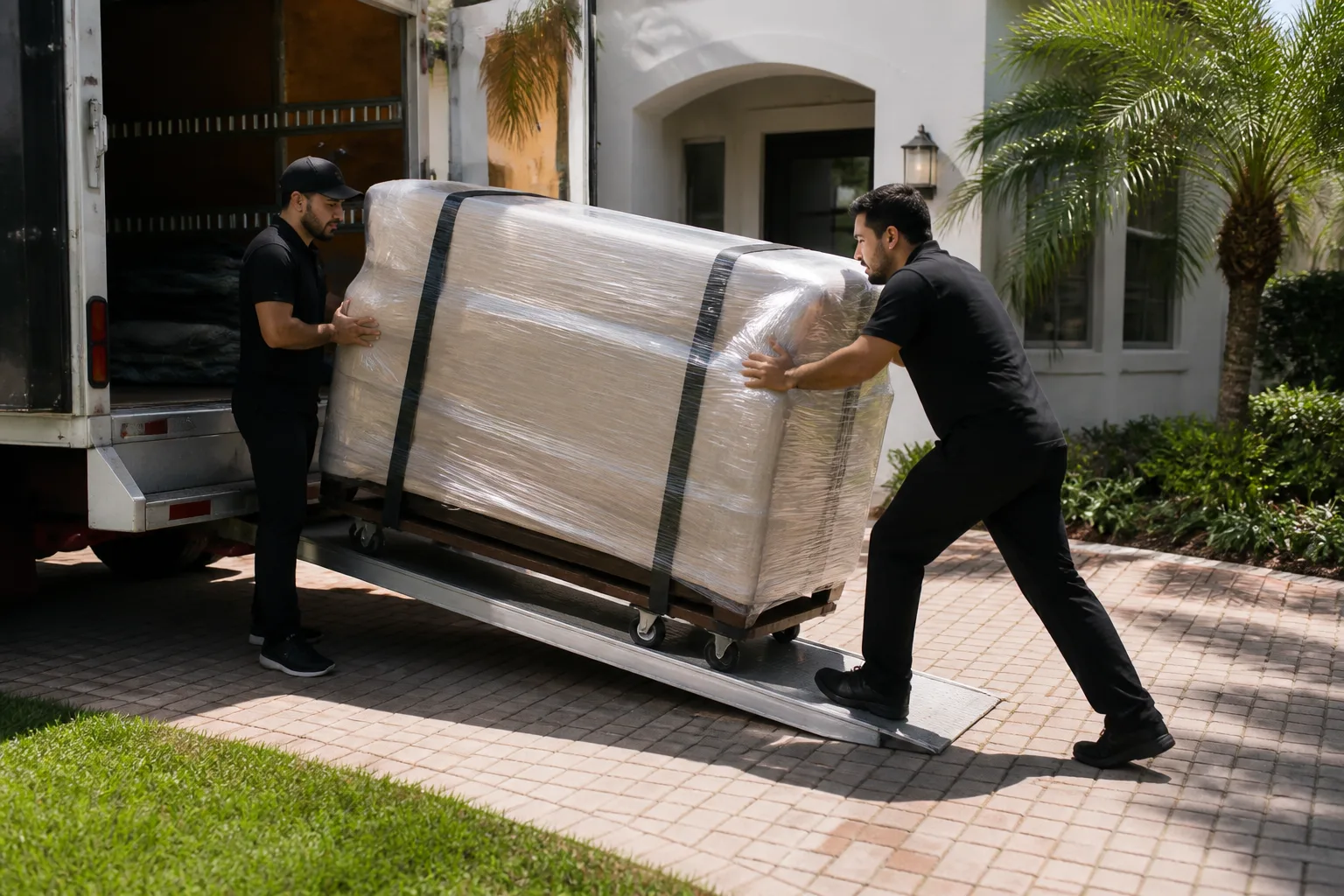
- Wrap headboard and footboard in moving blankets, then stretch wrap. Cardboard corners help on ornate or upholstered pieces.
- Bag the mattress in a heavy-duty mattress bag, not a thin plastic sheet. Uline sells bags rated for moving that won’t tear on the truck ramp.
We moved a four-poster last month over in Hollywood Hills where the customer had tried to move it assembled. The posts caught a doorframe and the headboard split at the joint. Disassembly would have taken 15 minutes. The repair took two weeks.
If your bed has a motorized adjustable base, that’s a specialty item. The motors and electronics need to travel flat, never folded or forced. Check your manufacturer’s guidelines - or call us.
Moving a Sofa: The Real Danger Is the Doorway
Sofas are deceptively heavy and surprisingly fragile. The frame is engineered for downward weight, not twisting force. The fabric or leather faces abrasion from every edge it passes. And the legs - often decorative, rarely reinforced - snap off if they take the load.
Remove the legs first. Most modern sofas have threaded legs that unscrew by hand. Older pieces may need a wrench. Bag the hardware, wrap the legs in bubble wrap, and pack them in a box labeled with the room.
Measure twice before you lift once:
- Measure the sofa’s height, width, and diagonal depth (from the back bottom corner to the front top corner).
- Measure your doorway height and width, and the stairwell turning space.
- If the diagonal depth is less than the doorway width, the sofa goes through standing on end.
- If not, you’ll need to angle it, back-first, in a controlled tilt.
Wrap the entire sofa in moving blankets, secured with stretch wrap. Pay special attention to the front corners and armrests - these hit doorframes first. For leather, use blankets only; stretch wrap directly on leather traps moisture and can cause discoloration.
In Hollywood, we see a lot of sectional sofas in newer builds. These are easier to move in pieces, but the connection hardware is proprietary. Keep the manufacturer’s assembly instructions, or photograph the underside before you separate the sections.
Moving a Refrigerator: Upright, Defrosted, and Empty
This is where DIY moves go seriously wrong. A refrigerator contains a sealed compressor system with oil that lubricates the motor. Tilt the unit more than 45 degrees, or worse, lay it on its side, and that oil drains into the refrigerant lines. Plug it in before the oil settles back, and you’ve bought a compressor replacement.
Safety note: Refrigerators are top-heavy and can tip with little warning. The compressor lines are also under pressure. If you’re not confident in your ability to control the weight through doorways and down ramps, this is the item to hand to trained movers. We’ve seen crushed feet, strained backs, and ruined appliances from a single misstep.
Here’s the proper sequence:
- Remove all food 24-48 hours before the move. Dispose of perishables, pack shelf-stable items separately.
- Unplug and defrost. Place towels around the base to catch meltwater. Remove and pack shelves and drawers separately - they rattle, crack, and shift during transport.
- Clean and dry thoroughly. Mold grows fast in a closed, warm refrigerator.
- Secure the doors with tape or a moving strap - not so tight that you warp the seal, but enough to prevent swinging.
- Move upright, always. If a doorway forces a brief tilt, keep it under 45 degrees and let it stand unplugged for the same amount of time it was tilted before restarting.
We moved a Sub-Zero for a customer in Emerald Hills last year where a previous mover had laid it on its side in a Budget Truck Rental. The compressor failed three days after delivery. That “saved” $200 on labor cost them $1,800 in repairs. Upright transport is non-negotiable for us.
What You’ll Need: Tools and Materials
Don’t start moving day with a run to the hardware store. Here’s what actually works:
| Item | Purpose | Where to Source |
|---|---|---|
| Moving blankets (thick quilted, minimum 72″ x 80″) | Surface protection for furniture | Uline, or rent from truck rental locations |
| Stretch wrap (18″, 80-gauge) | Secures blankets, bundles loose items | Uline, Home Depot |
| Mattress bags (rated by bed size) | Protects from dirt, moisture, tears | Uline, Amazon |
| Furniture dollies (solid deck, 1,000 lb. capacity) | Moving heavy items on flat surfaces | Home Depot, or included with some truck rentals |
| Furniture straps / forearm forklift | Two-person lifting control | Harbor Freight, Uline |
| Basic tool kit | Disassembly of beds, sofas, appliances | Your own; Milwaukee makes reliable sets we see on jobs |
Skip the thin plastic furniture covers from discount stores. They tear on truck ramps and offer no padding. We’ve unwrapped sofas at delivery where the “protection” had shredded and the fabric was filthy from truck bed grit.
Loading Order and Truck Placement
How you load matters as much as how you wrap. These three items are among the largest and heaviest in a typical household move, so they drive the truck packing strategy.
Load the refrigerator first, against the front wall of the truck (closest to the cab). It’s the heaviest, most stable item, and placing it there keeps weight forward for safer driving. Strap it upright to the wall rail. Never place it where it can shift or tip.
The sofa goes next, typically on its side along the truck wall if height allows, or flat on the floor with legs removed. Blankets between it and the refrigerator. Mattresses and bed frames fill the remaining floor space or stand along the opposite wall.
Key loading rules:
- Heaviest items lowest and forward
- Nothing rests on a sofa cushion or mattress surface
- Strap every major piece to the truck’s E-track or rail system
- Use cardboard or blankets between items to prevent rubbing
If you’re using U-Pack or a portable container instead of a rental truck, the same principles apply but space is tighter. Measure your container’s interior before you commit to moving these items yourself. We’ve had customers in Hollywood call us mid-move when they realized their sofa wouldn’t fit through the container’s narrower opening.
When to Call a Professional Mover
There’s honest value in doing it yourself. There’s also honest risk. Call a pro when:
- The item weighs more than you can control safely through your home’s specific doorways and stairs
- You don’t have the vehicle, equipment, or second person for proper lifting
- The piece is high-value, antique, or under warranty that DIY moving voids
- You’re moving long-distance and need guaranteed delivery timing
At Milestone Moving Co., we send a uniformed, background-checked crew with a binding written quote after a real survey of your home. The number doesn’t change on move day. Your pickup and delivery window is committed in writing. And our 90-Day Done Right Promise means if anything we moved or packed isn’t right, one call brings a crew or a check - not a claim form that disappears into a subcontractor’s voicemail.
Related services in Hollywood: We handle full-service residential moves, including disassembly, padding, transport, and reassembly of beds, sofas, appliances, and everything else in your home.
The Bottom Line
Moving a bed, sofa, and refrigerator without damage comes down to three things: proper disassembly, quality protective materials, and keeping heavy items upright and controlled through every doorway and ramp. Skip any of these and you’re gambling with furniture worth thousands and a refrigerator that may never cool again.
Key takeaways:
- Disassemble beds and sofas completely; photograph first for reassembly reference
- Defrost refrigerators 24+ hours, move upright only, and wait before restarting
- Invest in real moving blankets and mattress bags, not thin plastic
- Load heaviest items first, forward, and strapped
- Know your limits - a dropped refrigerator or snapped sofa frame costs more than professional handling
If you’re in Hollywood and want these items moved by a crew that shows up in uniform, works from a binding written quote, and stands behind the job for 90 days after delivery, call Milestone Moving Co. at (855) 890-3455. Estimates are free, and every full-service move includes wardrobe boxes at no charge.
Frequently Asked Questions
No. Laying a refrigerator on its side allows compressor oil to drain into the refrigerant lines, which can cause permanent damage. Always keep a refrigerator upright during transport. If a doorway forces a brief tilt, keep the angle under 45 degrees and let the unit stand unplugged for at least as long as it was tilted before plugging it back in. For a move with multiple stairs or tight turns in Hollywood, call (855) 890-3455 and we’ll handle it upright with the right equipment.
Wrap leather sofas in clean moving blankets only - never apply stretch wrap directly to leather, which traps moisture and can cause discoloration or mildew. Remove legs and wrap them separately. Keep the sofa away from any items that might leak or sweat in the truck. If your leather piece is high-value or vintage, professional handling with climate-controlled transport may be worth the cost.
Yes. Headboards, footboards, and side rails should all be separated for safe transport. A bed frame moved assembled is prone to joint stress, corner damage, and impossible angles through doorways. Photograph the assembly first, keep hardware labeled and attached to the largest piece, and wrap all components in padded blankets. This 15-minute step prevents the most common bed damage we see.
Underestimating the doorway. Sofas and mattresses that measure fine on paper still fail at the turn in a Hollywood stairwell or the narrow entry of a older Florida home. The second biggest mistake is inadequate padding - a single unwrapped corner rubbing against a truck wall for a 200-mile drive will wear through fabric or scratch wood. Measure your path, pad thoroughly, or call (855) 890-3455 for a crew that does both.
Written by Dale Whitmore, Owner & Crew Chief, Milestone Moving Co. at Milestone Moving Co., serving Hollywood since 2006.
Need Moving Help?
Call Milestone Moving Co. - licensed & insured, here with fast after-hours help in Hollywood.
(855) 890-3455