
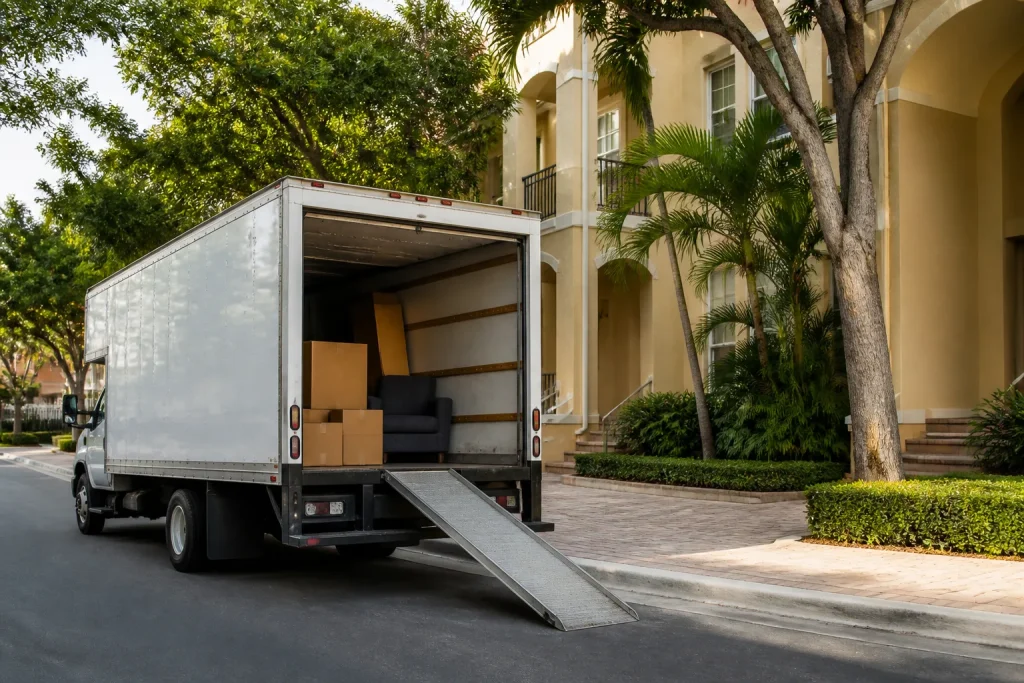
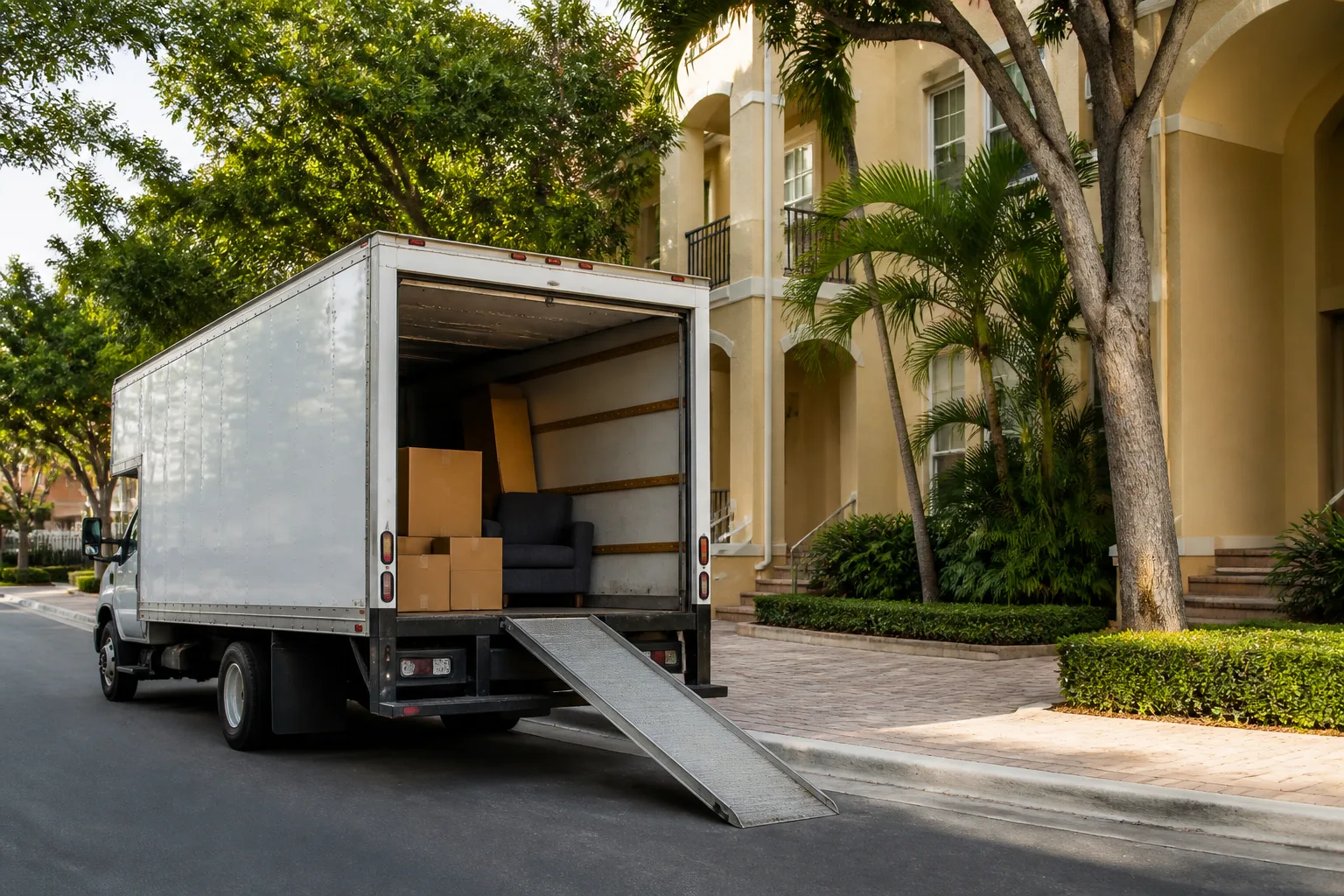
Parking a Moving Truck in Dallas
Parking a moving truck in Dallas requires understanding three things: where 26-foot box trucks are legally allowed, what permits you need for street loading, and how Dallas’s mixed zoning and apartment density turn a simple stop into a ticket or tow. Most DIY movers get this wrong on day one and spend their first morning arguing with a property manager or paying a $150 impound fee.
If you’d rather not navigate Dallas parking rules yourself, Milestone Moving Co. handles permits, loading zones, and building coordination on every move we run. Call (855) 890-3455 for a free estimate.
Where Can You Legally Park a Moving Truck in Dallas?
Dallas splits truck parking into three categories: commercial loading zones, residential street parking, and private property. Each has rules that don’t match what you’d expect in Hollywood, Florida, where we’ve operated since 2006.
Commercial loading zones downtown and in Deep Ellum, Uptown, and the Design District allow trucks up to 30 minutes without a permit if actively loading. The catch: these zones sit on major arterials like Elm Street, McKinney Avenue, and Howell Street, and they’re often occupied by delivery vans. A moving truck idling in a no-standing zone draws parking enforcement within 10-15 minutes in our experience.
Residential street parking is where most DIY movers stumble. Dallas City Code Chapter 28 prohibits trucks over 22 feet from parking on residential streets between 2:00 AM and 6:00 AM unless actively loading or unloading. A 26-foot U-Haul or Budget Truck Rental box truck exceeds this limit. The fine runs $75-$150, and repeat violations can trigger towing at the owner’s expense.
Private property - apartment complexes, HOAs, storage facilities - often has the most restrictive rules. We’ve coordinated moves in Dallas where buildings require:
- 72-hour advance notice to building management
- Proof of general liability insurance (usually $1 million minimum)
- Designated loading dock time slots, sometimes as narrow as 2-hour windows
- Freight elevator reservations with security escort requirements
The Knox-Henderson and Bishop Arts neighborhoods have particularly tight access. Streets there were laid out in the 1920s-40s with parking on both sides and no loading zones. We’ve seen movers block traffic for 20 minutes trying to back a 26-footer into a driveway built for a Model A Ford.
Do You Need a Permit to Park a Moving Truck on Dallas Streets?
For most residential moves, no city permit exists for temporary truck parking. Dallas does not issue short-term “moving truck permits” the way some cities do. This surprises people relocating from Chicago or Philadelphia where you can buy a street occupancy permit for $25-$50.
What Dallas does offer: a Right-of-Way Permit for construction and commercial activity that blocks a lane or sidewalk. This requires 10 business days’ notice, a $150 application fee, proof of insurance, and a traffic control plan. For a one-day residential move, this is impractical.
The workaround most people use: park legally in a commercial lot nearby and shuttle belongings with a smaller vehicle, or coordinate with the destination property for dock or driveway access. We’ve done moves in Dallas where the closest legal truck parking was three blocks away. Our crew shuttled everything on dollies. It added two hours to the job, but zero tickets.
For high-rise buildings in the Arts District or Victory Park, loading dock access is typically the only viable option. These buildings rarely allow street-level truck parking for liability reasons. Building engineers require certificate of insurance documents 48-72 hours in advance. We keep templates on file and submit them automatically for every Dallas move we book.
How Dallas Geography and Weather Affect Truck Parking
Dallas sits on the Blackland Prairie with clay-heavy soil that holds water. After heavy rain - common in spring and fall - apartment complex parking lots and residential driveways soften. A loaded 26-foot truck (roughly 12,500 pounds gross weight) will sink into unpaved shoulders or cracked asphalt. We’ve extracted trucks from muddy apartment lots in Addison and Richardson after storms.
Summer heat brings a different problem: asphalt softening. In July and August, Dallas pavement temperatures hit 140-150°F. A heavy truck parked in one spot for 4-6 hours can leave ruts or damage sealed surfaces. Some HOAs in Plano and Frisco explicitly prohibit moving trucks on their asphalt between June 1 and September 15. Check your lease or HOA covenants.
Flash flooding is the wildcard. Dallas’s drainage infrastructure, especially in older neighborhoods like Lakewood and Oak Cliff, can be overwhelmed in 30 minutes of heavy rain. A truck parked in a low spot becomes a stranded asset. We monitor weather on every Dallas job and have rescheduled three moves in the past two years when radar showed training storms.
Apartment Complexes and HOA Rules in Dallas
Dallas-Fort Worth has one of the nation’s highest apartment construction rates. Many complexes built since 2015 have dedicated freight lanes and loading docks. Older stock, particularly the garden-style complexes built in the 1970s-90s along Skillman Street, Walnut Hill Lane, and Forest Lane, do not.
Common restrictions we encounter:
- Time limits: Loading dock access restricted to 9 AM – 5 PM weekdays, no weekend access
- Vehicle size caps: No trucks over 20 feet in surface lots (enforced by towing companies on contract)
- Elevator restrictions: Freight elevators reserved 48 hours ahead; passenger elevator use prohibited for moves
- Deposit requirements: $200-$500 damage deposits, sometimes held 10-14 business days post-move
We always call the property management 72 hours before arrival. One call saves more time than any other single step. For a move we ran last year near White Rock Lake, the property manager revealed - only when asked directly - that their “loading zone” was actually a fire lane with a 15-minute enforcement window. We rerouted to a back service entrance that wasn’t on any map the tenant had seen.
When to Call a Professional Mover in Dallas
Parking logistics are where DIY moves unravel. You can pack boxes well, load a truck efficiently, and still lose half a day to permit research, property management phone tag, and a ticket you didn’t know existed.
We recommend calling a pro when:
- Your origin or destination is in a high-rise, historic district, or HOA-governed property
- You’re moving during Dallas’s peak thunderstorm season (April-May, September-October)
- The truck size you need exceeds 22 feet and street parking is your only option
- Your building requires insurance certificates or dock reservations you don’t know how to obtain
Related services in Hollywood: If you’re starting your move from South Florida, our Milestone Moving Co. team handles the origin-side packing, loading, and coordination with your Dallas-bound driver. We also offer labor-only help if you’ve arranged transport separately but need trained crew for the heavy work.
Practical Tips for DIY Truck Parking in Dallas
If you’re handling the move yourself, here’s what actually works:
- Scout the location 48 hours before move day. Drive the exact route with your personal vehicle. Note overhead clearances, turn radii, and whether that “ample parking” the apartment website promised is actually a compact-car lot.
- Call the property manager, not just the front desk. Ask specifically: “What is the exact procedure for a [truck size] moving truck on [date]?” Get a name and extension.
- Download the Park Dallas app. It shows real-time meter and zone restrictions. Not all zones are intuitive - some allow commercial loading only during business hours, others prohibit it entirely.
- Have a Plan B parking location. Identify a legal commercial lot within two blocks. Budget $20-$40 for a day’s parking if needed.
- Bring printed insurance documents. Many Dallas buildings won’t accept phone screenshots. A printed certificate of insurance with the property named as additional insured is standard.
- Don’t block alleys. Dallas Fire-Rescue can ticket and tow with no warning if you block alley access. Alleys are common in older neighborhoods and are narrower than they appear.
One light note: we once had a crew chief call from a Dallas move, laughing, because the tenant had assured him “there’s plenty of room out front.” The “room” was a roundabout with a decorative fountain in the center. The truck made it - barely - but only after our driver walked the radius with a tape measure. We still tell that story in our Hollywood office. Measure first, trust second.
The Bottom Line
Dallas moving truck parking demands advance planning that most people underestimate. The city has no simple permit process for residential moves, apartment rules vary dramatically by property age and management company, and the clay soil plus summer heat create physical constraints you can’t see from Google Street View.
Key takeaways:
- Trucks over 22 feet face overnight parking bans on Dallas residential streets
- No city moving permit exists; building coordination is your only path
- Call property management 72 hours ahead with specific questions
- Weather and soil conditions can restrict where heavy trucks stop
- Professional movers carry insurance and relationships that speed building access
If you’re planning a Dallas move from Hollywood or anywhere in South Florida, Milestone Moving Co. handles the logistics start to finish. Our binding written quote includes permit research, building coordination, and a named pickup and delivery window that doesn’t shift. Call (855) 890-3455 for a free in-home or video estimate.
Frequently Asked Questions
No, not legally on residential streets. Dallas City Code prohibits trucks over 22 feet from parking on residential streets between 2:00 AM and 6:00 AM unless actively loading or unloading. A 26-foot U-Haul exceeds this limit and risks a $75-$150 ticket or towing. For a binding quote on a move where we handle the truck and parking logistics, call (855) 890-3455.
Dallas does not issue short-term residential moving truck permits. Your options are: use private property parking with owner permission, coordinate loading dock access through your building management, or park in a legal commercial lot and shuttle belongings. The city’s Right-of-Way Permit is designed for construction, not moves, and requires 10 business days and $150. If your building requires insurance documentation you don’t have, a professional mover can provide it. Call (855) 890-3455 to discuss.
It varies by property. Newer high-rises typically have docks accommodating 26-foot trucks. Older garden-style complexes often restrict surface lots to 20 feet or prohibit trucks entirely. We always verify dock dimensions and surface lot rules 72 hours before arrival. For moves we’re managing, this verification is built into our process. Call (855) 890-3455 for details.
You pay the tow fee (typically $150-$250), storage fees accruing daily, and any ticket fines before the vehicle is released. Dallas uses multiple private tow companies under city contract; locating your truck requires calling the Dallas Police non-emergency line with your plate number. This is why we scout parking in advance on every job we run. Our 90-Day Done Right Promise covers the move itself, but we prevent towing through planning, not after-the-fact recovery. Call (855) 890-3455 to book a move where parking is our problem, not yours.
Written by Dale Whitmore, Owner & Crew Chief, Milestone Moving Co. at Milestone Moving Co., serving Hollywood since 2006.
Need Moving Help?
Call Milestone Moving Co. - licensed & insured, here with fast after-hours help in Hollywood.
(855) 890-3455