
Moving Appliances: Water Lines, Gas Connections and Warranties
Moving major appliances requires disconnecting water lines, capping gas connections, and understanding how your warranty stays intact through the process. Most manufacturers void coverage if an unlicensed person handles gas fittings, and water line leaks discovered after move-in often trace back to improper shutoff or transport. If you’d rather not manage the disconnects yourself, call us at (855) 890-3455 and we’ll coordinate the licensed trades as part of your move plan.
Here’s a mistake we see too often: a homeowner in Hollywood unplugs the refrigerator, pulls it straight out, and tears the copper water line still connected at the wall. The kitchen floods. The hardwood swells. The move day stops cold while a plumber gets found. We’ve been handling appliance moves since 2006, and the pattern is predictable because the steps seem simple until one gets skipped.
Refrigerators: Water Lines and Defrosting
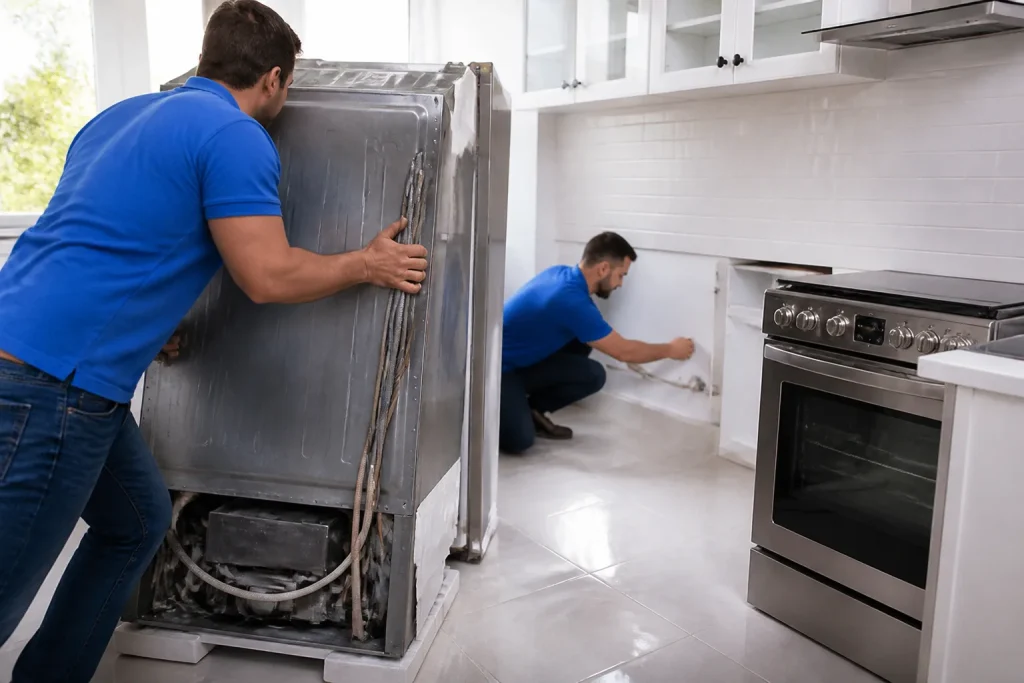
Start 24 hours before move day. Turn off the water supply at the shutoff valve behind the fridge, usually a small saddle valve on the copper line. Run the dispenser until it empties. Then disconnect the line at the refrigerator end, not the wall, catching residual water in a towel. Leave the line coiled and taped to the back of the unit so it doesn’t drag.
Defrosting takes longer than most people allow. A full freezer needs that full day to soften ice buildup. Move it with frost still clinging and you’ll have water pooling in the truck, then mold in the insulation. We mark every refrigerator move on our Hollywood jobs with a defrost confirmation checklist because we’ve opened trucks to find puddles that soaked cardboard and warped dresser bottoms.
For transport, keep the refrigerator upright. Laying it on its side lets compressor oil migrate into refrigerant lines. If it must tilt, let it stand unplugged at the new location for the same number of hours it spent horizontal before powering on. Most manufacturers specify 24 hours upright before restart.
Key checks:
- Shutoff valve tested and holding, not dripping
- Water line capped or coiled and secured
- Interior dried, baking soda placed inside for odor
- Doors taped shut with appliance tape, not duct tape that leaves residue
Gas Ranges and Dryers: Connections That Require a License
This is where we stop and recommend a licensed plumber or gas fitter. In Hollywood and throughout Florida, gas appliance disconnect and reconnect requires a permit in most jurisdictions, and your homeowner’s insurance may deny a fire claim if an unlicensed person touched the line. The risk isn’t theoretical. A loose flare fitting, a damaged flexible connector, or a forgotten shutoff valve left cracked can fill a garage or kitchen with gas over hours.
We pulled a range out of a garage over in Hollywood Hills last month where the homeowner had disconnected the gas himself. The flexible connector was original to a 1998 installation, corrugated brass, now prohibited by most codes. He didn’t know it was recalled. We flagged it, stopped the move, and had our network plumber replace it with a new stainless-steel connector before the range went on the truck. The move cost an extra hour. A gas explosion would have cost everything.
If you’re handling this yourself: shut off gas at the appliance valve, never at the main meter unless you know how to relight pilots. Test with soapy water on the disconnected fitting. Bubbles mean gas is still flowing. Cap the line with a proper plug, not tape. For reconnection at the new home, Florida code requires a new flexible connector; reusing the old one violates most manufacturer warranties and local inspectors will flag it.
When to call a pro: Any gas line work. The $150-$250 for a licensed plumber in Hollywood is binding against the cost of a fire, a voided warranty, or a failed home inspection when you sell.
Dishwashers: The Forgotten Disconnect
Dishwashers hide their complexity. Power, water supply, and drain line all converge in a tight space behind the kick plate. Most homeowners remember the power at the breaker. Many forget the water line, a 3/8-inch compression fitting under the sink. The drain hose, looped up inside the cabinet before dropping to the disposal or wye fitting, must be disconnected at the sink end to avoid flooding the cabinet when the unit slides out.
Transport dishwashers upright with the door secured. The tub is porcelain-coated steel; a hard knock cracks the coating and starts rust. We pad and strap every dishwasher in our Hollywood fleet trucks because even a sudden stop can shift weight against the interior rack supports.
At installation, the drain hose must maintain that high loop before connection. Without it, sink water backflows into the dishwasher. We’ve been called back to jobs where a DIY reconnect missed this step, and the customer ran a cycle to find dirty water pooled in the tub.
Washing Machines: Hoses and Transit Bolts
Front-load washers ship with transit bolts that stabilize the drum during moving. If yours are lost, order replacements from the manufacturer before move day. Running a front-loader without them, even across a room, can snap the spider arm that holds the drum. The repair often exceeds replacement cost.
Supply hoses are the second failure point. Rubber hoses deteriorate from the inside; five years is their practical life. We check the manufacture date stamped on the hose and recommend replacement if they’re close. In Hollywood’s humidity, rubber ages faster than in drier climates. Burst washing machine hoses are among the top five home insurance claims nationally, and most happen within the first two years of installation or after the fifth year.
Disconnect hot and cold at the machine, not the wall, unless you’re replacing the valves. Drain residual water into a bucket. Transport upright with hoses coiled inside the drum and the lid taped shut.
Related services in Hollywood: For full-service moves including appliance disconnect coordination, see our Milestone Moving Co. home page and ask about our Move-Right Guarantee on binding quotes.
Warranties: What Moving Does and Doesn’t Void
Manufacturer warranties on appliances typically cover defects in materials and workmanship. They do not cover damage from improper handling, unlicensed installation, or transit incidents. The distinction matters because movers’ liability and manufacturer warranties are separate systems with different rules.
Most appliance warranties require installation by a licensed professional to remain valid for the full term. Samsung, LG, Whirlpool, and GE all specify licensed installation for gas connections and water line hookups. Move the appliance yourself, reconnect it yourself, and a compressor failure six months later may be denied as “improper installation.” We’ve seen it happen.
Your mover’s coverage, meanwhile, handles physical damage during transit. Our Move-Right Guarantee includes full-value protection on everything Milestone packs, but that covers dents, scratches, and drops, not a voided warranty from unlicensed reconnect. We document appliance condition with photos before and after transport, and we coordinate licensed plumbers and gas fitters in Hollywood when customers want the full chain of accountability.
The 90-Day Done Right Promise applies to our work: if anything Milestone moved or packed isn’t right, one call brings a crew or a check within 90 days of delivery. Warranty disputes with manufacturers are outside that promise, which is why we flag the licensing requirement upfront.
Preparing Appliances for Long-Distance Moves
Cross-country transport adds vibration, climate variation, and handling by multiple crews if you use a van line with transfers. Our long-distance moves use one crew, start to finish, but even then, appliances need extra preparation.
Refrigerators traveling through humidity changes need thorough drying. A sealed unit with residual moisture grows mold in the compressor compartment that you’ll smell for years. We recommend activated charcoal or coffee grounds inside, replaced after delivery.
Gas appliances moving state-to-state may need recertification for the new jurisdiction. California, for example, requires different flexible connector standards than Florida. Check with your destination’s building department before move day, or ask us to include compliance verification in your binding quote.
For washing machines, the transit bolt issue becomes critical. A drum bouncing for 1,200 miles destroys bearings that a local move might spare. We verify bolts are installed and document it on the inventory.
Current standing offers include $250 off moves over $2,500, a free in-home or video estimate, and free wardrobe boxes on every full-service move. For long-distance appliance moves from Hollywood, that estimate includes a named pickup and delivery window, not a two-week spread.
The Bottom Line
Moving appliances comes down to three rules: disconnect completely, transport properly, reconnect with a license. Skip any step and you’re gambling with water damage, gas leaks, or a voided warranty that outlasts the move by years. The tools are basic, but the consequences of getting it wrong are not.
Key takeaways:
- Defrost refrigerators 24 hours and keep them upright
- Never reuse old gas connectors; Florida code requires new
- Front-load washers need transit bolts or the drum destroys itself
- Manufacturer warranties require licensed reconnection to stay valid
- Document appliance condition before and after any move
If you’re in Hollywood and need help, Milestone Moving Co. offers free estimates. We’ll survey your appliances in person or by video, put a binding number in writing, and coordinate licensed disconnects and reconnects so your warranties stay intact. Call (855) 890-3455.
Frequently Asked Questions
You can shut off the appliance valve, but Florida code and most manufacturers require a licensed plumber or gas fitter to disconnect and cap the line formally. Doing it yourself risks a gas leak, fire hazard, and voided warranty. Call (855) 890-3455 if you want us to coordinate the licensed trades as part of your move.
If it stayed upright, four hours is sufficient. If it tilted or lay on its side, let it stand upright for the same number of hours it spent horizontal, up to 24 hours. This lets compressor oil drain back to the sump. Plugging in too soon locks the compressor and voids most manufacturer warranties.
No. Manufacturer warranties cover defects in materials and workmanship, not transit damage or improper handling. Transit damage falls under your mover’s liability coverage. Our Move-Right Guarantee includes full-value protection on everything Milestone packs, documented with photos before and after transport.
If your rubber hoses are over five years old, yes. In Hollywood’s humidity, rubber deteriorates faster than in drier climates. Burst hoses are a leading cause of home water damage. Stainless steel braided hoses cost $20-$40 and last indefinitely. We check hose dates on every move and flag replacements before transit.
Written by Dale Whitmore, Owner & Crew Chief, Milestone Moving Co., serving Hollywood since 2006.
Need Moving Help?
Call Milestone Moving Co. - licensed & insured, here with fast after-hours help in Hollywood.
(855) 890-3455